Custom patches are one of the most effective ways to build brand identity, foster team unity, and create a professional appearance across your entire organization. Whether you’re outfitting a corporate team, a nonprofit, a sports league, or a military unit, ordering patches in bulk requires careful planning. Done right, custom patches become powerful branding tools that last for years. Here’s everything you need to know to get it right the first time.
Why Custom Patches Matter for Organizations
Before diving into the ordering process, it’s worth understanding why custom patches have become a go-to branding solution for organizations of all sizes.
Patches communicate professionalism instantly. When every member of your team wears the same embroidered logo or insignia, it signals cohesion, authority, and pride. Unlike printed t-shirts that fade or peel, high-quality embroidered patches maintain their appearance through hundreds of washes. They’re also versatile — attachable to uniforms, jackets, bags, hats, and more.
For organizations specifically, patches solve a practical problem: how do you maintain a consistent visual identity across dozens, hundreds, or even thousands of people? The answer lies in a streamlined, well-planned bulk ordering process.
Step 1: Define Your Patch Requirements
The first step is getting crystal clear on what you actually need. Gather your team and answer these core questions:
What is the patch for? Logo patches, department identifiers, rank insignia, event commemoratives, and name patches all have different design demands.
How many do you need? Bulk orders typically start at a minimum of 50–100 pieces. The more you order, the lower the per-unit cost. If your organization has multiple departments or locations, factor all of them in to maximize your volume discount.
Where will the patch be worn? The surface matters. A patch on a stiff jacket requires different backing than one on a soft polo shirt. Define your application surface before you finalize the design.
Step 2: Create a Strong Design
Your patch design is everything. A cluttered or poorly scaled design will look unprofessional, especially at small sizes. Here’s how to set your design up for success:
- Keep it simple. Patches typically range from 2 to 5 inches. Complex designs with thin lines or tiny text get lost at this scale. Stick to bold shapes, strong outlines, and readable fonts.
- Use your brand colors intentionally. Most embroidery manufacturers work with thread colors from the Pantone Matching System (PMS). Share your brand’s official PMS codes so your patch colors match your other branded materials exactly.
- Work with the manufacturer’s art team. Reputable patch suppliers offer free digitizing services — the process of converting your design into an embroidery-compatible file. Take advantage of this. Their experts know what translates well to thread.
- Request a digital proof before production. Never approve a bulk order without seeing a mockup first. Many suppliers also offer physical samples for large orders, which is worth requesting when ordering for an entire organization.
Step 3: Choose the Right Patch Type
Not all patches are created equal. Choosing the right type depends on your use case, budget, and aesthetic preference.
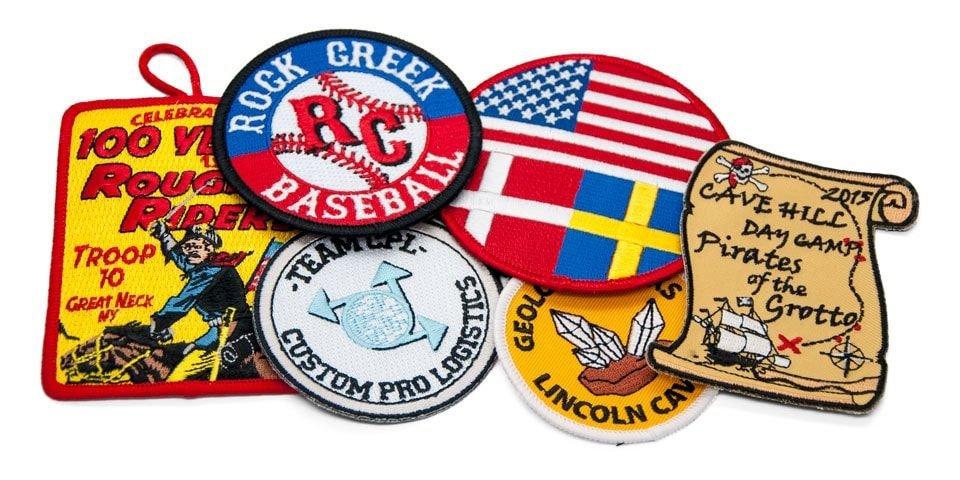
Embroidered patches are the classic choice — durable, professional, and widely recognized. They work well for logos and insignia with bold, simple designs.
PVC patches are made from soft rubber and are ideal for outdoor or tactical use. They’re waterproof and extremely durable, making them popular with military units, security firms, and outdoor organizations.
Woven patches can capture finer detail than embroidered options and are better suited for complex designs with small text.
Chenille patches offer a textured, vintage feel and are popular with sports teams, schools, and varsity programs.
For most corporate or professional organizations, embroidered patches strike the best balance of quality, cost, and appearance.
Step 4: Select the Right Backing
Backing determines how the patch attaches to the garment. For organizations, this choice impacts ease of distribution and application.
- Iron-on backing is the most common for civilian use — easy to apply without sewing.
- Velcro backing is preferred by military, law enforcement, and tactical teams who need to swap patches between uniforms.
- Sew-on backing offers the most permanent attachment and is best for uniforms that go through heavy laundering.
- Adhesive backing works for temporary applications or non-fabric surfaces.
If your organization has multiple uniform types, consider ordering patches with a universal backing that works across contexts.
Step 5: Find a Reliable Manufacturer
For bulk organizational orders, choosing the right supplier is critical. Look for manufacturers with:
- Verified reviews and portfolio samples from similar organizations
- Low minimum order quantities that suit your team size
- Clear turnaround times — most quality manufacturers take 2–3 weeks for bulk orders
- Responsive customer service that will guide you through proofing and revisions
- Competitive pricing tiers that reward larger orders
Get quotes from at least three suppliers before committing. Compare not just price, but turnaround time, sample policies, and revision limits.
Step 6: Place, Track, and Distribute
Once you approve the final proof, place your order and confirm the production timeline. For large organizations, build in buffer time before the date you need the patches in hand.
When the patches arrive, inspect a sample from the batch before distributing to confirm quality matches the approved proof. Then establish a clear distribution system — whether by department, location, or role — so every member of your organization receives their patch without confusion.
Final Thoughts
Ordering custom patches for your entire organization is an investment in your brand and your team culture. When approached systematically — from defining requirements and designing thoughtfully to choosing the right type and finding a trustworthy manufacturer — the process is straightforward and the results are lasting. Start planning early, involve your stakeholders in the design phase, and partner with a supplier who understands bulk organizational needs. Your team will wear the results with pride.